
Exploring the World of Global Law
In today’s interconnected world, the concept of global law is becoming increasingly relevant. As borders become more porous and technology allows for easier communication and trade between countries, the need for a universal legal framework becomes apparent. Simply put, global law refers to the body of laws that govern international relations and interactions between different nations.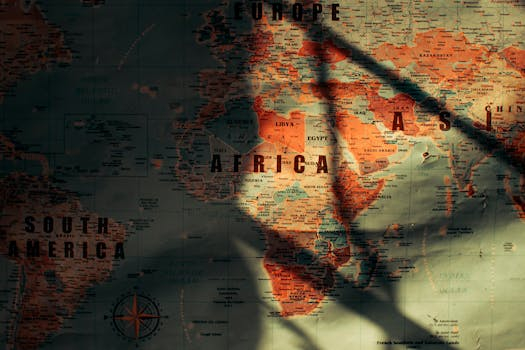
The Importance of Global Law
Global law plays a crucial role in ensuring that there is order and stability in the international community. It provides a set of rules and regulations that govern how countries interact with each other and how conflicts between nations should be resolved. This helps to promote peace, security, and cooperation among countries.
Additionally, global law is essential in protecting the rights and interests of individuals, groups, and businesses operating in different parts of the world. It ensures that everyone is treated fairly and has access to justice regardless of their nationality or location.
The Evolution of Global Law
The concept of global law has evolved over time, and its development can be traced back to ancient civilizations. In ancient Greece, city-states would have diplomatic arrangements and agreements with each other to regulate trade and resolve disputes. This laid the foundation for the development of international law.
Later, during the 16th and 17th centuries, global law was primarily concerned with issues related to war and peace between countries. However, with the establishment of the United Nations in the 20th century, there was a shift towards a more comprehensive and inclusive approach to global law. Today, global law covers a wide range of topics, including trade, human rights, environmental protection, and international crime.
The Main Sources of Global Law
There are various sources of global law, and the most important ones include treaties, conventions, and customs. Treaties are written agreements between countries that outline their rights and obligations towards each other. They are a crucial tool for regulating relationships between nations and establishing international norms.
Conventions, on the other hand, refer to general agreements reached by a group of countries on specific global issues. For instance, the Paris Agreement on climate change is a convention that aims to reduce carbon emissions and combat global warming.
Customary international law is based on the practices and beliefs that have been accepted by the international community over time. It covers issues such as diplomatic immunity, the protection of diplomats, and the use of force in self-defense.
The Challenges of Global Law
Despite its many benefits, global law also faces significant challenges. One of the biggest challenges is the lack of enforcement mechanisms for international laws. Unlike domestic laws that are enforced by governments through their judicial systems, there is no central authority responsible for enforcing global laws. This makes it challenging to hold countries accountable for any violations of international law.
Another challenge is the clash of cultures and ideologies that can make it difficult to reach a consensus on certain global issues. Different countries may have different customs, beliefs, and values, which can make it challenging to form a unified approach to global law.
Conclusion
In conclusion, the world of global law is complex and constantly evolving. It plays a critical role in maintaining peace, promoting cooperation, and protecting the rights of individuals and countries. However, there are also significant challenges that need to be addressed to ensure that global law remains effective in regulating international relations and promoting a fair and just global community.