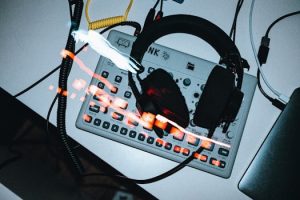
Exploring the World of Rare and Vintage Synthesizers
Imagine walking into a music studio filled with an array of vintage and rare synthesizers that have been collected over decades. The sight alone is enough to spark curiosity and ignite a passion for exploring the world of these unique instruments. Synthesizers have been an integral part of music production since their invention in the early 1900s. However, as technology advanced, many of these instruments were discontinued, making them even more sought after by collectors and musicians alike. In this article, we will take a deep dive into the fascinating world of rare and vintage synthesizers, their history, and their impact on modern music production.

The Evolution of Synthesizers
Synthesizers are electronic musical instruments that generate sound through a combination of different methods, including analog, digital, and physical modeling techniques. The first version of a synthesizer was called the Theremin, invented by Russian scientist Leon Theremin in 1919. It used an antenna and oscillators to produce sound and was the first instrument to use electricity as its primary source.
In the 1960s, the first commercially available synthesizers were introduced, including the Moog Synthesizer, the Buchla Modular Electronic Music System, and the EMS VCS3. These analog synthesizers revolutionized music production by allowing musicians to create entirely new sounds and explore different tones and textures.
The Rise of Vintage Synthesizers
As technology continued to advance, more and more synthesizers were produced, and many of the early models became obsolete. However, in the 1980s, there was a resurgence of interest in vintage electronics, and analog synthesizers, in particular, gained popularity among musicians and collectors.
One of the most iconic vintage synthesizers is the Roland TB-303, released in 1982. Originally designed to be used as a bass accompaniment for guitarists, the TB-303 was largely unsuccessful and discontinued after only a year. However, it was later rediscovered by electronic music producers who used its distinctive sound in their tracks, making it a highly sought-after instrument in the vintage market.
The Rarity Factor
What makes vintage synthesizers even more intriguing is their rarity. Many of these instruments were produced in limited quantities, and as years go by, their numbers continue to dwindle. Some manufacturers, like Moog Music, have started reissuing their classic models to meet the high demand, but most vintage synthesizers remain rare and highly collectible.
Exploring the World of Vintage Synthesizers
For musicians and producers, owning a vintage synthesizer is like owning a piece of musical history. Each instrument has its own unique character and sound, making it a valuable addition to any studio. However, buying vintage synthesizers can be an expensive hobby, with some models ranging in the thousands of dollars.
One of the easiest ways to explore the world of vintage synthesizers is through online communities and forums. These platforms allow enthusiasts to share their knowledge, discuss different models, and even buy, sell, and trade vintage instruments.
Attending synth meets and conventions is another great way to discover and try out different vintage synthesizers. These events bring together collectors, enthusiasts, and manufacturers to showcase their instruments, offer workshops, and provide networking opportunities.
The Influence of Vintage Synthesizers on Modern Music Production
Although vintage synthesizers may seem like a thing of the past, their impact on modern music production is undeniable. Many musicians and producers still incorporate these instruments into their music, whether it’s for their unique sound or for nostalgia’s sake.
The resurgence of analog synthesizers has even led to the creation of new companies solely dedicated to producing vintage-style instruments. These modern-day synthesizers offer the same character and sound as their vintage counterparts, but with added features and reliability.
The Legacy of Vintage Synthesizers
The legacy of vintage synthesizers is evident in almost every genre of music, from rock and pop to electronic and even classical. Artists and bands like Kraftwerk, Depeche Mode, and Pink Floyd have all used vintage synthesizers in their music, cementing their role in shaping the sound of modern music.
In conclusion, the world of rare and vintage synthesizers is a fascinating one, filled with history, character, and innovation. These instruments have played a significant role in the evolution of music production and continue to ignite the passion of musicians and collectors around the world. As technology continues to advance, it’s essential to recognize and appreciate the impact these vintage instruments have had, and will continue to have, on the world of music.